Support for your next step

Stories can remind you that you don’t need to take that next step alone.

↖ Return

Prayers up, tobacco down

Don’t let the stories burn the way the totem poles did. Pass them down, exactly as they were given to you, so we don’t lose them, and so we don’t make the same mistakes again.

I grew up hearing “prayers up, tobacco down” without ever being taught what it truly meant, so I held onto it through memory instead: my great-grandfather’s pipe, my grandmother’s blanket, the stories told at every potlatch. Now I pass those same stories to my own children, exactly as they were given to me, so nothing gets lost the way our totem poles were.

Trigger Warning: Forced removal of Native children, death and lung cancer, cultural erasure and colonization

This story is about: Traditional tobacco and stories carried through generations

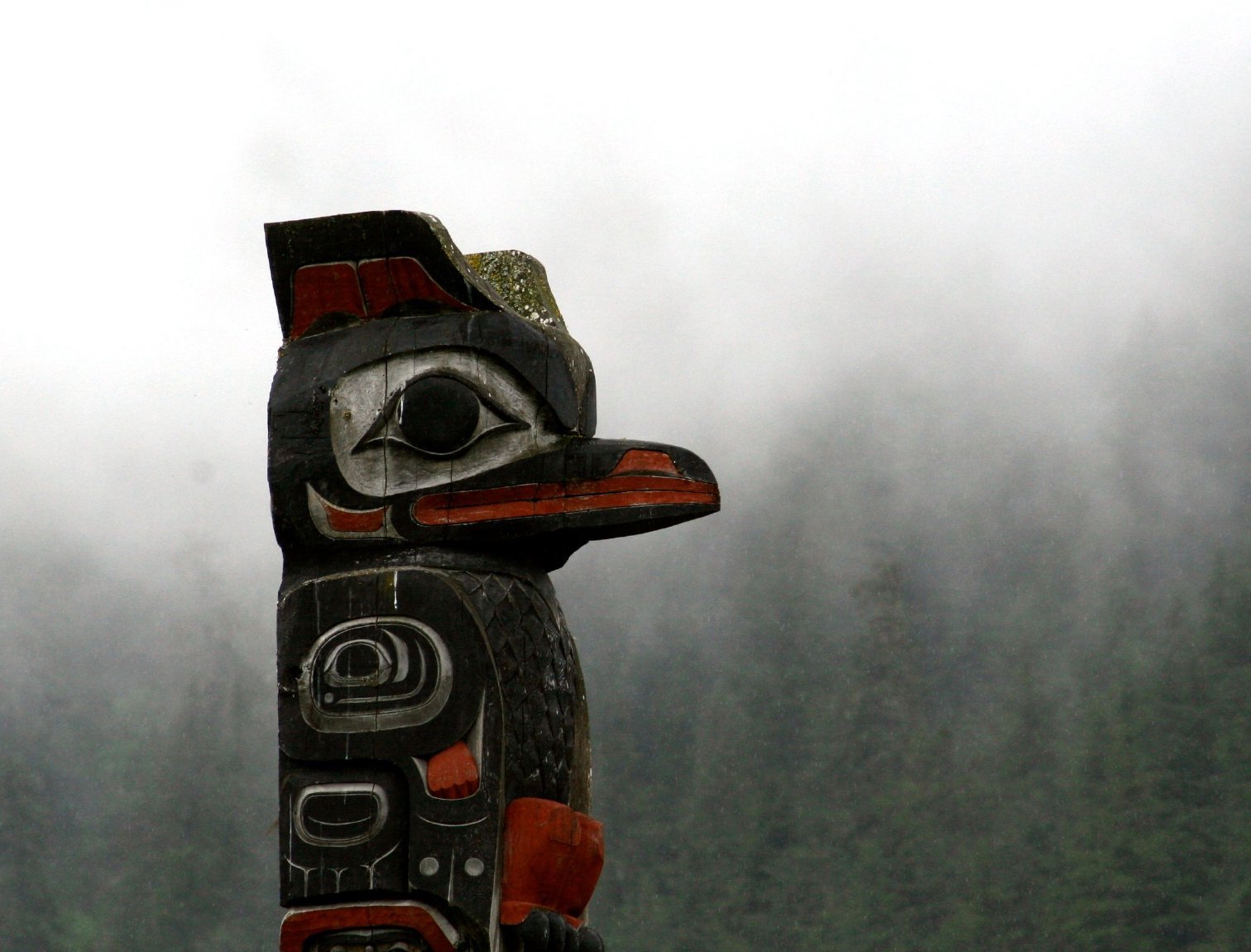
A carved wooden totem pole topped with a bird's head painted black, red, and white, seen against a foggy evergreen forest.

Growing up, I always heard the Elders say it: prayers up, tobacco down. I wondered for a long time what that actually meant. I knew our people used tobacco, but I pictured it wrong for years. I thought it was loose tobacco, packed into a pipe and smoked. Nobody ever sat me down and taught me about it directly. Three of my grandparents smoked, and what I have instead of a lesson is a memory: my great-grandfather, my grandmother’s father, filling his pipe and lighting it. He was blind by then, and my grandmother was the one who brought him his tobacco. It’s a good smell, in my memory.

As a teenager I was a dancer. My grandmother made me a blanket, and I danced with our songs and our stories at community potlatches. When I was about fourteen or fifteen, I went to Vancouver for a totem pole raising and danced there too. At potlatches, the stories always came out, stories about people fishing, stories told at a memorial about a man who had passed, what he used to fish, what his family was like. We smoked our own salmon. I never had to buy fish growing up.

My favorite stories were about the eagle and the raven, because that’s how our families are divided. I’m from the eagle clan, so on my blanket I can wear an eagle, a hummingbird, a skate, a blackbird, crests that belong to us. The raven side wears their own Northwest Coast crests, fish, killer whales, their own sub-crests. That’s how you can look at someone’s blanket and know their family, know which longhouse they come from. We used to have longhouses and totem poles all through our villages, until the government made us cut them down. They called them evil.

My kids know these stories. My sister knows them, everyone in the family does, we bring them up at dinner, at dances, whenever a potlatch happens. If it’s the eagle clan holding the potlatch, the raven clan serves the food and the coffee, and the other way around when it’s theirs. My son has been on a canoe journey from Haida Gwaii all the way to Bella Bella. He carries it forward the way I did.

People ask if I’m afraid the stories will die out. I’m not. They’ll stay in us. If you’re somewhere and someone starts talking about our culture, our chief, what he did, who lived in the village, you lean in, you want to know. It’s written down in us the way it’s written down in the old accounts, even through everything that happened. My own grandmother believed in the church, went every week, even after the missionaries came for her children. My uncles were twins, and the government took them away to a school because someone decided it would be better for them. My grandmother was alone in the house, her husband was already sick with lung cancer and there was nothing she could do. They didn’t even need to break in. The doors weren’t locked.

I think about how it must have felt to watch our totem poles cut down and burned, told they were evil, told to be ashamed. That’s why I tell my children: don’t let the stories burn the way the totem poles did. Pass them down, exactly as they were given to you, so we don’t lose them, and so we don’t make the same mistakes again.

Read similar stories

Finding my way back

Do you really know where you came from? That’s when the healing starts

I grew up Sioux but never close to any of it, until two Native veterans at the Elders' center opened the door back to my own people. What I found wasn't a guarantee of answers, just a direction: help the next person who has less than you do.

This story is about: Reconnection

Sound is medicine

There’s nothing like a grandmother’s love, and I never got that piece of it.

I lost many of my Native ways before I had the chance to learn them. Over time, sound, stories, drumming, flute, and community became ways to reconnect with culture and make space for healing.

This story is about: Reclaiming hidden heritage, teaching what was withheld, and understanding commercial tobacco

Opening the door

That’s the door I want to open, helping people connect back to their own heritage, because the hunger is real.

I didn’t understand my own heritage until I was a teenager, and I know what it’s like to be the kid nobody explained anything to. Now my daughter and I teach others what our traditions actually mean, including how the tobacco sold today is different from what our people used to grow.

This story is about: Teaching, reconnecting with tradition, and understanding tobacco

What I carve, I keep

What matters most to me now is remembering I represent my grandchildren every time I make a choice.

Smoking stayed with me through decades of building a life as a carver, a mother, and a community leader, even after I quit once and relapsed under stress. Getting healthy enough to quit for good gave me more years to carry my culture and my family's stories forward.

This story is about: Long-term health, family responsibility, and carrying culture forward

The last cigarette

When he found out he had cancer, he smoked one cigarette on the drive to the hospital, and then he told my sister to quit.

My dad died before he could teach my kids the things I wish he’d taught me: the arrowheads, the traditional pipes, the stories that went with them. His diagnosis came fast, and I think about how much sooner we could have talked about quitting.

This story is about: Family loss, lung cancer, and the value of catching it early

Take what helps and leave the rest.