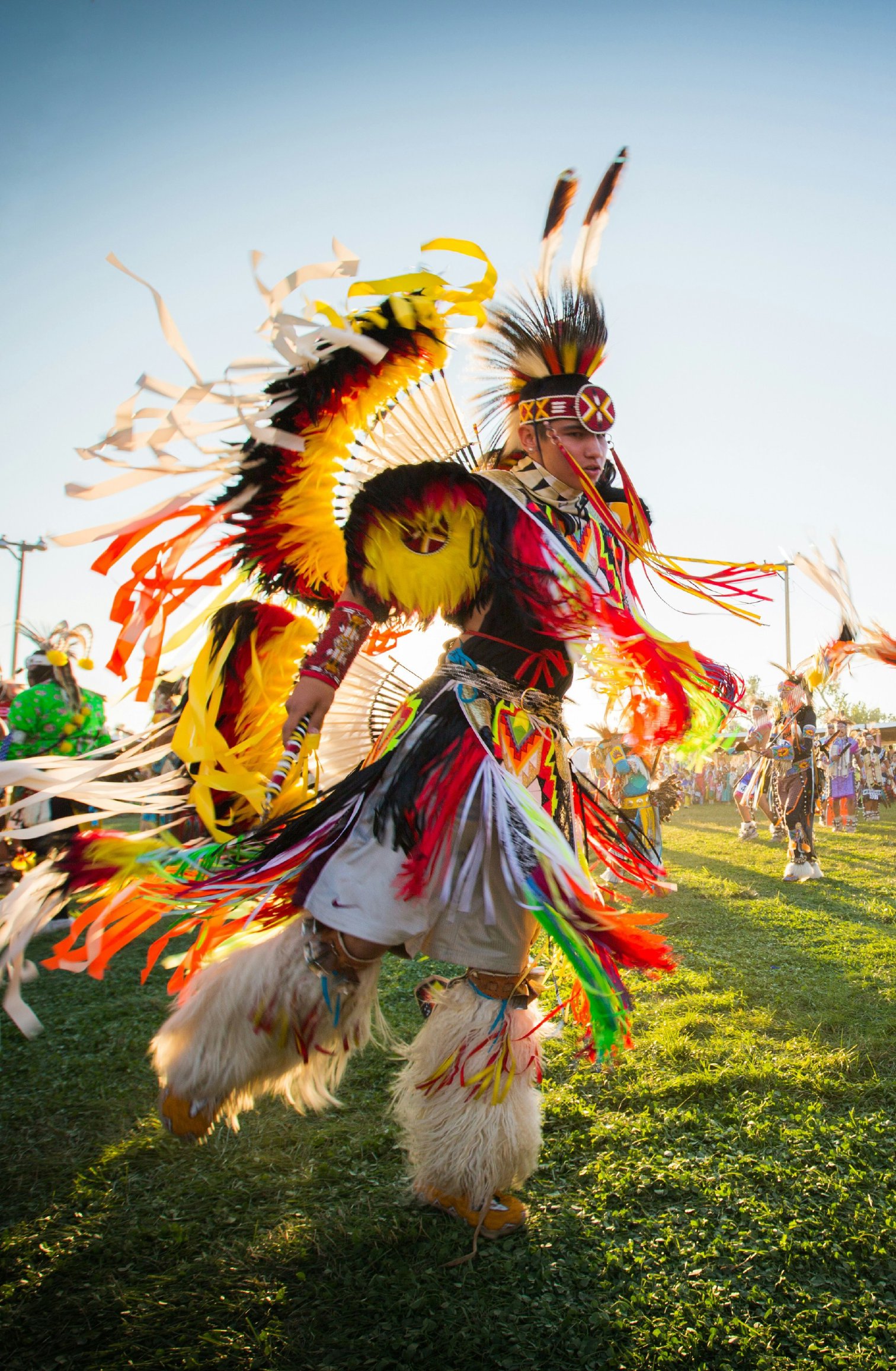
I didn’t understand what my heritage was until I was a teenager, because my grandma wouldn’t allow it. We used to hang out at the park with the local Indians, and when my grandma found out, she sent me straight back to my mom’s. She was embarrassed to be Native. My mom was only thirteen when she had my sibling, and she and her uncle were put in a mission where they weren’t taught their own heritage either. My grandma walked her own hard road. Not knowing where you come from, it sucks. I mean that plainly. There’s no softer word for it.
So when I finally found my way to it, I held on with both hands. My mom inspired us to start making things. We used to have a gift shop and bead store on the reservation in Montana, near Flathead State Park. That’s where it started: making things, and teaching people, Native and non-Native, what those things mean. What a dream catcher actually is. What a ribbon skirt represents. What MMIW stands for, what Orange Shirt Day is about, what the drumming means when you hear it. My daughter and I run the Bead Catchers now for exactly that reason, education matters. So many non-Natives still think we just wear feathers and that’s the whole picture. There’s so much more to explain, and I’d rather explain it than let people guess.
Out of my five kids, only one really grasped onto the culture in a deep way. She’s the one who works the shop with me. Another daughter flies a Flathead Nation flag but doesn’t go looking for the culture beyond that. My youngest wants to be more involved, sits on the health board, but isn’t always someone I can count on to follow through. And one daughter is working on her regalia right now. She wants to dance while she’s also finishing her doctorate in business. Everybody finds their own way in, in their own time, and I’ve stopped expecting it to look the same for each of them.
What I hear most from people, especially urban Natives, is that they’re searching. Those who didn’t grow up on a reservation, who don’t have family members to ask, they’re out there looking for a way in and don’t know where to start. That’s the door I want to open, helping people connect back to their own heritage, because the hunger for it is real.
People want to know about the rituals. How do you smudge? Which one do you smudge first? What’s it actually for? You open your doors and windows when you smudge so the negativity has somewhere to go. Any new home, any new vehicle, you smudge it, or you can do a smudge bath. With tobacco, it’s the same hunger for the real thing, you offer it to Mother Earth, but people don’t always realize the tobacco sold today isn’t what our people used; it used to be pure, organic, and now there are chemicals in it. It’s the same with sage, people want to know where it came from, how it was gathered. A lot of Natives believe sage shouldn’t be sold at all, only gifted, and that’s something we take seriously at the shop. My daughter started a garden with a greenhouse, and we’ve talked about growing our own sage next year instead.
We hand out flyers, we pass out information, we keep the door open. Not long ago there was a shop in Tacoma running workshops on regalia and moccasins, and it reminded me how much this work is happening in small pockets everywhere, one person teaching another. That’s really all this is. Helping people find some answers when nobody else will sit down and give them any. I know what it’s like to be the kid nobody explained anything to. I don’t want that for anyone else who’s still looking.